|
12-24-2025 |
|
|
|
Forward is Wisconsin Watch’s look ahead at what's happening in state government and politics. We are reader-powered. Donate today. |
|
|
|
|
|
The last 15 years of Wisconsin politics have been tumultuous, but they should also give some comfort to those who worry about the rise of American authoritarianism.
The pendulum swings.
Our pluralist electorate abhors single-party rule.
Wisconsin Republicans swept into power in 2011 and passed laws aimed at ensconcing a permanent legislative majority. But democracy found a way, through statewide gubernatorial and Supreme Court elections. Now Democrats are on the threshold of winning similar power in the new year. What would they do with that power? Exact revenge? Restore balance?
Brittany Carloni checked in with some of the few Democrats remaining from the last time they were in power to find out how they would govern. Will their answers rally their base?
Tom Kertscher has a roundup of evergreen fact briefs (meaning they aren’t tied to a specific daily news event) from the past year.
Speaking of evergreens, read to the end for a story about the first evergreen placed in Wisconsin’s Capitol rotunda more than 100 years ago.
We’ll be off next week as we celebrate Christmas and New Year’s. See you again on Jan. 5.
Thanks for reading!
— Matthew DeFour, State Bureau Chief, mdefour@wisconsinwatch.org
|
|
|
|
|
|
TOP OF MIND |
|
|
|
If Democrats win a majority in one or both chambers of the Legislature in 2026, the party will have more power to govern than any time in more than 15 years.
Senate Minority Leader Dianne Hesselbein, D-Middleton, said she saw a sign of what that future could look like during the state budget-writing process earlier this year. With just a three-seat advantage in the Senate, Republicans needed to work across the aisle to advance the budget, and Senate Democrats had a seat at the negotiating table, Hesselbein said.
For the past 15 years of Republican majorities in the Senate and the Assembly, GOP lawmakers have been able to operate largely without input from legislative Democrats. In 2011, following the Republican midterm surge during President Barack Obama’s presidency, a GOP trifecta in the Legislature and the governor’s office advanced legislation aimed at cementing a permanent majority.
They passed laws such as Act 10, which dismantled Democratic-supporting public sector unions; strict voter ID, which made it harder for students and low-income people to vote; and partisan redistricting, which kept legislative Republicans in power with near super-majorities even after Democrats won all statewide offices in 2018.
After years of being shut out of the legislative process, Senate Democrats won’t operate that way if the party wins control of the chamber next year, Hesselbein said.
“We have an open door policy as Democrats in the state Senate. We will work with anybody with a good idea,” she said. “So we will try to continue to work with Republicans when we can and seek common values to really help people in the state of Wisconsin.” |
| Read the full story |
|
Notable
-
A new report from the Wisconsin Policy Forum indicates school district property taxes are rising 7.8% in December, the largest percent increase since 1992. Contributing to the increase are a record number of local referendums, a $325 annual increase in revenue limits created through a Gov. Tony Evers veto two years ago and no offsetting increase in general school aid in the latest budget. County property taxes are set to rise 3.1%, which is similar to increases in recent years, the report states.
-
Eric Hovde, the 2024 GOP Senate candidate, announced on social media last week that he will not run for governor in 2026. It’s likely a good sign for U.S. Rep. Tom Tiffany, the current Republican front-runner, whose only primary opponent so far is Washington County Executive Josh Schoemann.
— Brittany Carloni, bcarloni@wisconsinwatch.org |
|
|
|
|
VOTEBEAT |
|
Here’s why Milwaukee elections are always viewed with suspicion
|
 |
|
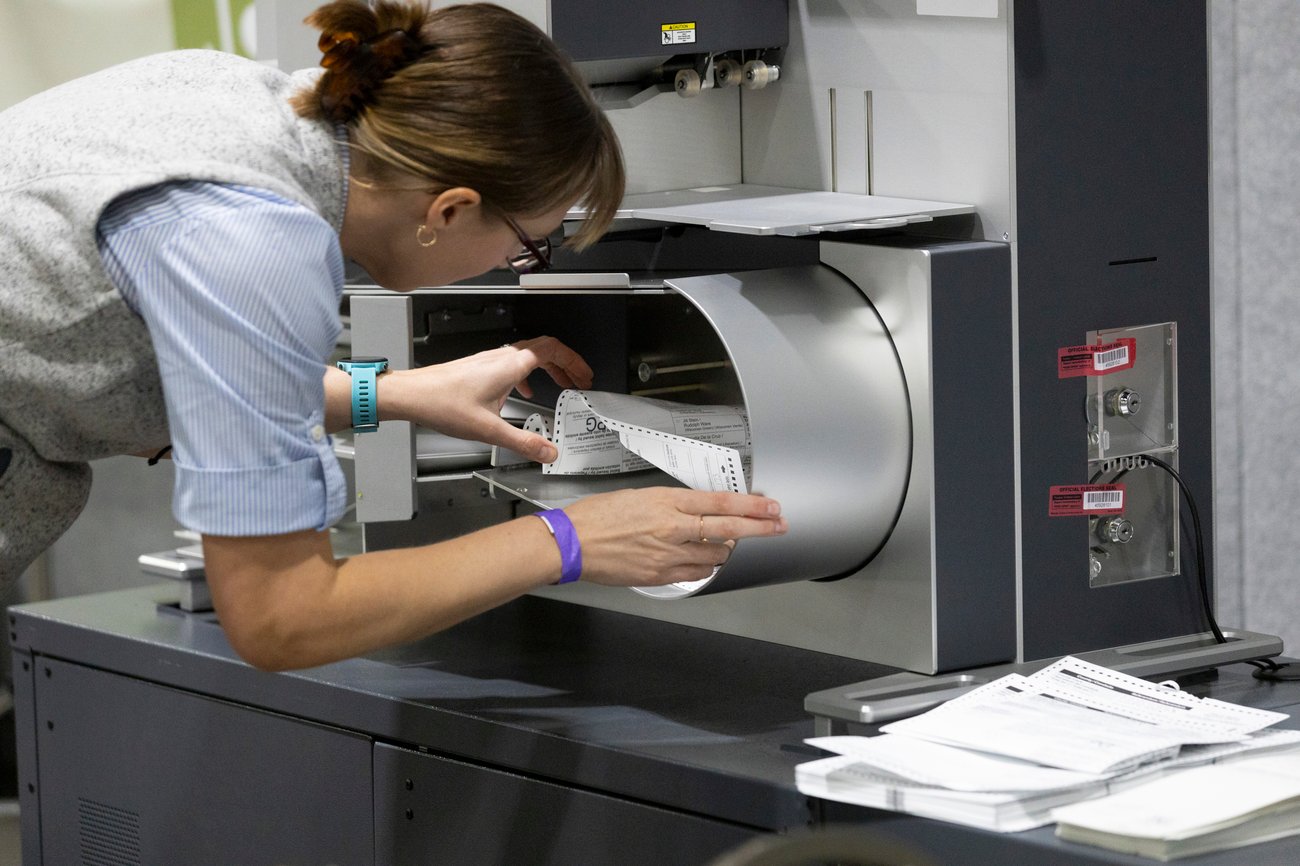
A ballot is temporarily stuck in a tabulation machine during Election Day on Nov. 5, 2024, at Milwaukee’s central count facility at the Baird Center in Milwaukee. (Joe Timmerman / Wisconsin Watch)
|
|
For nearly two weeks following Election Day in 2024, former U.S. Senate candidate Eric Hovde, a Republican, refused to concede, blasting “last-minute absentee ballots that were dropped in Milwaukee at 4 a.m., flipping the outcome.”
But, just as when Donald Trump blamed Milwaukee for his 2020 loss, Hovde’s accusations and insinuations about the city’s election practices coincided with a surge of conspiratorial posts about the city. Popular social media users speculated about “sabotage” and “fraudulently high” turnout.
Hovde earlier this year told Votebeat that he believes there are issues at Milwaukee’s facility for counting absentee ballots, but he added that he doesn’t blame his loss on that. He didn’t respond to a request for comment in December for this article.
In Wisconsin’s polarized political landscape, Milwaukee has become a flashpoint for election suspicion, much like Philadelphia and Detroit — diverse, Democratic urban centers that draw outsized criticism. The scrutiny reflects the state’s deep rural-urban divide and a handful of election errors in Milwaukee that conspiracy theorists have seized on, leaving the city’s voters and officials under constant political pressure.
That treatment, Milwaukee historian John Gurda says, reflects “the general pattern where you have big cities governed by Democrats” automatically perceived by the right “as centers of depravity (and) insane, radical leftists.”
Charlie Sykes — a longtime conservative commentator no longer aligned with much of GOP politics — said there’s “nothing tremendously mysterious” about Republicans singling out Milwaukee: As long as election conspiracy theories dominate the right, the heavily Democratic city will remain a target.
Read the full story here.
More from Votebeat:
— Alexander Shur
|
| Read the full story |
|
|
|
|
|
|
|
NOTUS |
|
|
|
Mandela Barnes called early Democratic front-runner, but Wisconsin governor’s race could be ‘wide open’
|
 |
|
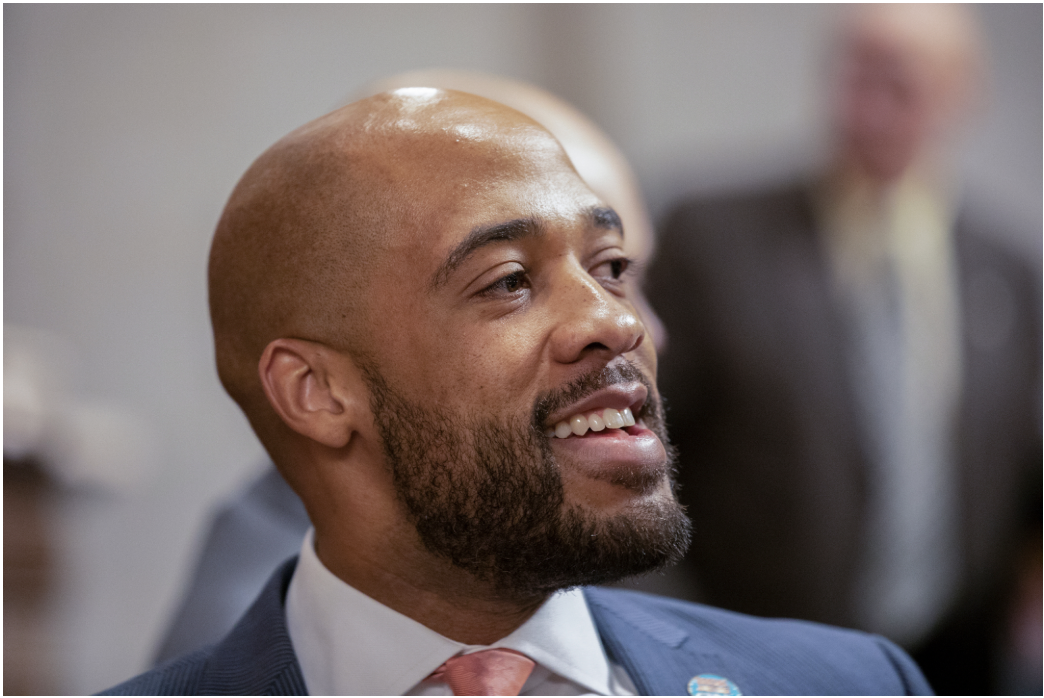
Former Wisconsin Lt. Gov. Mandela Barnes is seen at the State Capitol in Madison, Wis., on Jan. 22, 2019. (Emily Hamer / Wisconsin Watch)
|
|
|
|
Mandela Barnes shouldn’t expect the Democratic primary field to clear for him in the Wisconsin governor’s race like it did when he ran for Senate, close watchers of the election say.
One reason why? Some anxious Democrats are worried about Barnes’ loss in the Senate race in 2022.
Barnes, the former lieutenant governor, lost to Sen. Ron Johnson in 2022 by just one percentage point. On the same ballot, Gov. Tony Evers won reelection by more than 3 percentage points. There’s still angst and unease for not capturing that Senate win, close watchers say.
“There might not be any issue that divides Democrats more” than Barnes’ electability, said Barry Burden, who runs the Elections Research Center at the University of Wisconsin–Madison.
The crowded primary field includes Milwaukee County Executive David Crowley, Lt. Gov. Sara Rodriguez, state Sen. Kelda Roys, state Rep. Francesca Hong, former Wisconsin Economic Development Corp. CEO Missy Hughes and former state Rep. Brett Hulsey. Earlier this month, Evers’ former aide, Joel Brennan, jumped into the race too.
Whoever wins is likely to face U.S. Rep. Tom Tiffany, the leading Republican candidate, who has routinely targeted Barnes on social media. Washington County Executive Josh Schoemann is also running.
— Christa Dutton and Jade Lozada
|
| Read the full story |
|
|
|
|
|
TRUTH SANDWICH |
|
Wisconsin Watch published 83 original fact briefs this year. Fact briefs are 150-word answers to yes/no questions based on surprising or dubious statements made by politicians or other information influencers.
We tend to focus on statements made by Wisconsin politicians, though their statements can range from local to national issues. Many of those are based on statements made about what’s in the news. They’re timely, relevant and easy to digest.
Other fact briefs shed light on topics that remain relevant weeks, months or years after the initial statement was made.
— Tom Kertscher, tkertscher@wisconsinwatch.org |
| Here’s a look at some of those from 2025 |
|
|
|
|
BACK WORDS |
|
A weekly reminder that the past has a lot to teach us about the present.
The first evergreen tree placed in the Capitol rotunda during the Christmas season was in December 1916 as the new building neared completion, according to the Wisconsin Historical Society.
A 40-foot tree for the rotunda arrived in Madison that year from northern Michigan, news reports show. It was lit on Dec. 23, 1916, during a two-day Christmas celebration organized by the local Rotary Club, which included donated gifts to “every child in the city” from the Capitol Mutual Club.
“Hundreds of children of all ages and sizes tried to stand still yesterday afternoon and listen to the strains of ‘Holy Night’ and other devotional strains interspersed with popular airs at the Rotary club celebration while their eyes were glued on the wonderful tree in the rotunda of the capitol, and the huge baskets of gifts furnished by the Capitol Mutual Club near it,” a Dec. 24, 1916, Wisconsin State Journal story wrote of the festivities. “The singing was very nice but judging from the howl that went up when Santa Claus began to distribute the gifts, the music was not the most interesting feature of the program.”
An evergreen tree is placed in the Capitol rotunda every year during the holiday season, while political party leaders have disputed calling it a Christmas tree or a holiday tree. Gov. Tony Evers gave the 2025 balsam fir from Oconto County the theme “The Learning Tree.”
— Brittany Carloni, bcarloni@wisconsinwatch.org
|
|
|
|
|
|
|
|
Clear, reliable news matters now more than ever. Wisconsin Watch is committed to providing independent journalism that breaks down the issues and helps you make sense of it all. If you value this kind of reporting, please support our mission so we can keep it free for everyone. |
| Donate today |
|
 |
|
Brittany Carloni
State government/politics reporter |
|
|
|
|